

FURNITURE & MOVING / FROM THE BLOG
Reading Flat Pack Instructions Before You Start Assembly
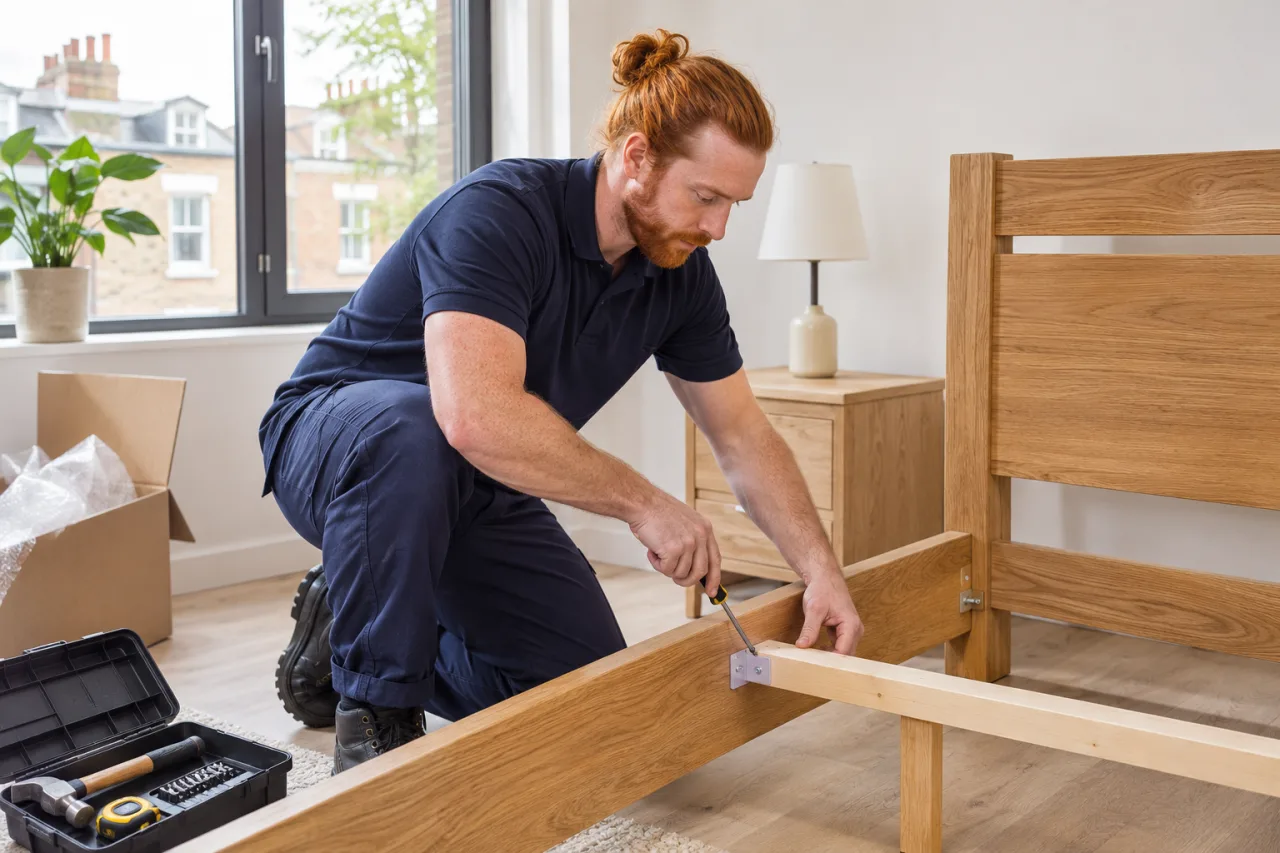
A flat pack manual describes a particular product and configuration. It is not interchangeable with a generic sequence for every wardrobe, desk or bed. Reading it before opening all the fittings helps you identify the tools, assistance and space the model requires. This guide explains how to use that document as a working reference, without replacing its directions with a universal order of assembly or an improvised method for unfamiliar hardware.
Check that the manual belongs to the delivered model
Match the model reference and configuration to the order and carton labels. Similar-looking products can use different fittings or construction details, and optional accessories may have their own instructions. If the document is missing, seek the correct version from the manufacturer or retailer. Do not choose a manual solely because its cover photograph resembles the furniture. Keep the version you are using available throughout the build. Where an assembler is taking over a started item, supply that document along with a clear account of what has already been completed.
Read the overview before handling connections
Look through the whole document to understand how the main stages relate. Note any diagrams about orientation, support, the number of people or the area needed for assembly. Check the tools specified rather than assume that powered equipment is appropriate for every connector. Some parts become inaccessible after a later panel is fitted, so the drawings may explain why an apparently convenient shortcut creates rework. Reading ahead does not mean changing the sequence. It gives context to the stage you are about to carry out and helps identify information that needs clarification.
Compare parts with the list and drawings
Use the manufacturer’s references to distinguish components and fittings. Two panels can look alike while having different holes, edges or intended orientations. Small connectors can differ in ways that are easy to overlook when several bags are opened together. Keep parts grouped so that a count remains meaningful. Where the diagram uses a symbol or an enlarged fitting detail, check its explanation before proceeding. Do not force a connection to make an uncertain part fit. Record the model and component reference if something appears absent, damaged or inconsistent with the supplied instructions.
Follow the specific sequence and tightening directions
Generic advice to leave every connection loose or to tighten every fitting immediately can be wrong for the product in front of you. Follow the manual’s directions for each stage and use the relevant tool. Check orientation before a component is fixed in a way that is difficult to reverse. Where support or assistance is specified, arrange it before releasing or raising the structure. An incomplete frame should not be treated as finished furniture. Stop if the next operation cannot be carried out with the required parts, space or support available.
Treat anchoring and moving mechanisms as separate checks
Read any instructions for wall anchoring, bed storage mechanisms, sliding doors or other moving assemblies before assuming the main frame completes the job. Wall work also depends on the wall construction, suitable fixings and permission. Furniture should not be described as ready for its intended use while a required safety stage remains unresolved. If another person or provider is responsible for a stage, identify that responsibility and record what remains outstanding. Do not substitute an online tip for the manufacturer’s directions on a mechanism or connection that is unfamiliar.
Use the manual during the final inspection
Check the completed configuration against the relevant drawings, including the supplied accessories and the movement of doors or drawers. Keep instructions and identifiable unused components for future reference. If a problem appears, describe the stage and part involved rather than repeatedly forcing a moving section. For professional flat pack assembly, send Fast Assemblers the model information and explain whether the item is unopened or partly built. Call 020 3746 1134 to discuss the furniture and room. A useful handover identifies completed work and any unresolved component or installation requirement.