

FURNITURE & MOVING / FROM THE BLOG
Should Furniture Be Dismantled Before Moving House?
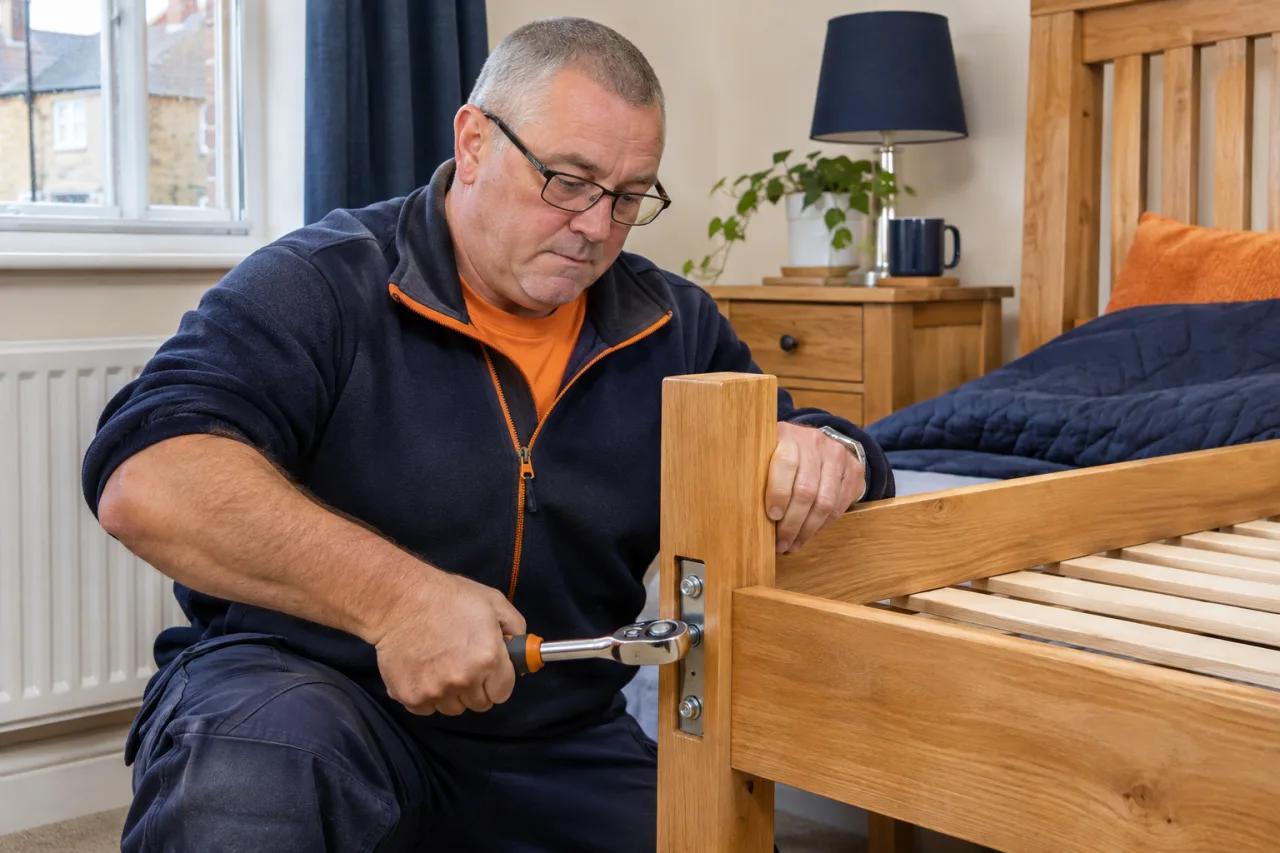
Taking every piece of furniture apart is rarely a useful starting rule for a move. Some items can travel assembled; others need selected components removed; some are unsuitable for another dismantling cycle. The decision depends on the construction, condition, route and destination. Work through those points before arranging transport so that dismantling, collection and rebuilding refer to the same agreed item list.
Start with the route rather than the furniture name
Measure the relevant furniture dimensions and identify the narrowest points along the carrying route. Consider the old property and the destination, including turns, stairs and door openings. A wardrobe that entered as flat packs may not leave as a complete frame. Conversely, dismantling a small unit that already fits the route may add handling without solving a problem. Measurements are information for assessing the move, not a promise that an item will pass a complicated turn. Share photographs of the actual route where they clarify an obstruction.
Assess what can be separated
Look for the model information and assembly instructions. Reusable bolts, cam fittings and removable sections differ from glued joints or damaged board connections. A piece that has been altered may not match its original instructions. Explain previous repairs, loose panels and missing connectors before work is agreed. Do not test whether a joint comes apart by forcing it. The assessment should establish which parts can be removed and what must remain together, including any heavy sections that need support while connections are released.
Choose the level of dismantling needed
A dining table may need its legs removed while the top remains intact. A bed may separate into rails and support components. A wardrobe can require a more extensive breakdown. There is no benefit in describing all three as the same task simply because they contain screws. Agree the intended result of dismantling: components suitable for the route and transport arrangement, with reusable fittings retained. If an item cannot reasonably be rebuilt in its current condition, identify that limitation before it leaves the original room.
Keep the component handover clear
List the separated furniture and note which fittings belong to each piece. Photograph distinctive connections before they are concealed by packaging, without relying on photographs as a substitute for the manufacturer’s instructions. Keep small hardware in closed, labelled containers. Do not tape directly onto a delicate finish or leave fittings loose inside an open drawer. Establish who receives the components at the destination. Where transport and reassembly are arranged separately, a clear handover reduces uncertainty about what was supplied and what remains to be located.
Check the destination before rebuilding
Confirm the intended room and position before the furniture is reconstructed. A different ceiling height, skirting arrangement or available floor area can change the practical build space. Existing damage should be distinguished from missing transport components and any proposed changes to configuration. Rebuilding means restoring suitable furniture using the retained or correctly sourced components; it is not an assumption that every piece can be redesigned. Discuss wall anchoring separately where the product instructions require it, including the wall construction and permission for the work.
Book the related work as distinct stages
Tell Fast Assemblers whether you need dismantling and reassembly, transport, or both. Include both postcodes where furniture is moving between addresses. Collection and delivery should specify what is being collected and what condition it will be in, rather than assume a van booking includes every assembly task. An item list, photographs and model details help define the quotation in GBP. Call 020 3746 1134 before the move to discuss the furniture and the access arrangements that apply to your addresses.